
The Healing Power of Creativity
Apr 09, 2026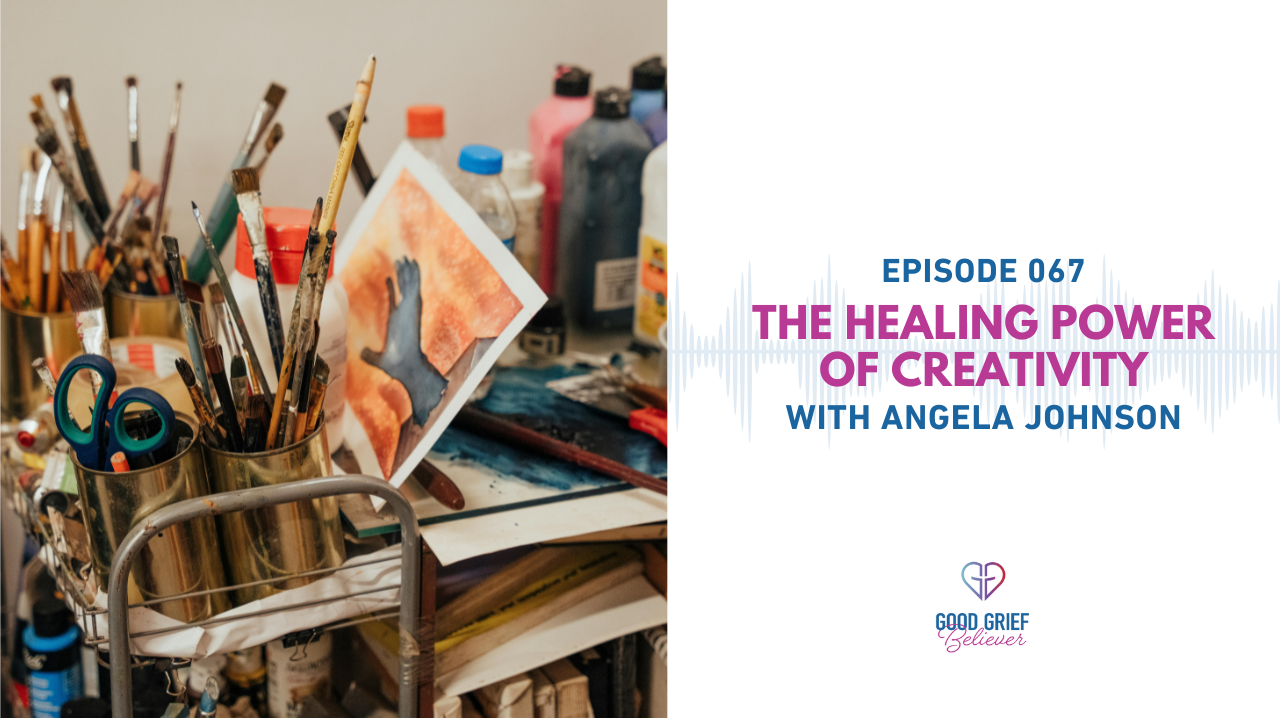
Ep. 067 with Angela Johnson
In a gentle, faith‑filled episode of the Good Grief Believer podcast, host Julie Craig sits down with sculptor Angela Johnson to talk about how grief reshaped a life and opened a surprising new calling.
From a childhood on a Montana dairy farm to a pivot from opera to sculpture, her story is a testimony to how faith, creativity, and human touch can meet loss and turn it into something that comforts many hearts.
From Mountain Meadows to Music: The Roots of a Tender Soul
Angela’s childhood shaped her faith and her sensitivity to beauty. Raised as the fifth of nine on a dairy farm near the Rockies, she learned to read the presence of God in nature — the sky, the quiet of fields, and the hush of mountains. Music became her refuge through hard things she could not yet name. Hearing operatic voices on her mother’s stereo, a young Angela decided she would sing. That dream carried her through decades of disciplined vocal study and many recitals.
But the path of a dream is not always the whole story of a life. Angela’s early life also carried deep shadows: childhood abuse and the long work of finding identity and safety. Over years of vocal training, the act of singing itself served as a form of “active grief” — a disciplined channel that helped give language and release to sorrow even while she pursued excellence.
This part of her journey will resonate with anyone searching “grief and creativity,” “healing through music,” or “how childhood trauma influences adult life.” Angela’s testimony reminds readers that grief has a long history and that healing often arrives in stages, carried by humble practices and steady faith.
A Divine “No” and the Astonishing Gift of Clay
One afternoon, while practicing at the piano, Angela felt a clear spiritual impression: her ultimate vocal goals would not be fulfilled. The message landed like a deep wound — a sudden and divinely precise “no.” The collapse of that life sent her into a state of grief so deep she felt almost paralyzed.
Then something unexpected happened. On impulse she drove to an art store, bought a block of water‑based clay and one tool, and began to sculpt on her kitchen table. Her hands plunged into clay and, for the first time in a long while, she felt the devastation lift. Where voice had been intangible, clay offered something to hold, shape, and see.
For those looking for “creative grief therapy” or “art therapy ideas for mourning,” Angela’s experience is a vivid example: tactile art can become an immediate, embodied way to grieve. The miracle wasn’t that sculpture replaced singing, but that making became a new language of healing. The tactile work met what words and music could not, and a new vocation quietly began.
From Private Wound to Public Witness: Sculpting Jesus for the World
Over the next decades Angela’s hands shaped large bronze works — larger‑than‑life depictions of Jesus and scenes from His life that now live in sculpture gardens, public memorials, and private gravesites. Her work blends faith and artistry: visitors look into the Savior’s eyes, touch a sculpted robe, and feel a tenderness that points beyond bronze to a living Christ.
Julie’s own story in the episode — commissioning a statue for her husband’s gravesite — shows how memorial art can both comfort and testify. That project, costly but sacred, transformed a family plot into a place where strangers also come to be still and remember. Those searching for “memorial ideas after loss,” “religious memorial sculpture,” or “ways to honor a spouse” will find Angela’s approach both practical and soul‑soothing: art becomes a physical sermon about love, resurrection, and ongoing presence.
The Tactile Language of Healing: Why Touch Matters
One of the episode’s most tender lessons is about language: grief often needs a medium. For Angela, voice — healing though it was — could not be touched. Sculpture could. She describes how clay answered a deep longing to hold something real. That tactile connection unlocked a new capacity to bear sorrow. For others, tactile or embodied practices — pottery, gardening, knitting, finger painting, or even walking in nature — can provide the same kind of safe channel for feelings that seem too big for words.
When people search “how to grieve well,” “creative ways to cope with grief,” or “therapeutic art activities,” Angela’s story points the way: find a medium you can touch, and let the body speak when the heart is raw.
Grief Ripples: Family, Faith, and Human Presence
Angela speaks plainly about how grief reshapes relationships. Recent losses in her own family — siblings and her mother — have drawn relatives closer: more calls, more tenderness, more intentional care. Her gentle counsel to grandchildren and younger listeners is simple: stay close to family, pray, read scripture, and resist the isolating lure of devices. She emphasizes that human presence — a warm hand, a look in the eye, a shared silence — brings healing that screens cannot.
Her faith colors everything she does. Angela believes — and her sculptures reflect — that grief is not the last word. Christ’s suffering and resurrection mean that sorrow is held and that relationships persist beyond the veil. That assurance is a balm for those searching “faith and grief resources,” “Christian grief support,” or “hope after loss.”
Practical Ways to Grieve Well: Reach Out, Create, Serve
Angela’s advice for grieving well is both practical and lovingly plain:
- Reach out and accept help: grief isolates; connection heals. Ask a friend to sit, bring a meal, or offer a listening ear. Searches like “how to support someone grieving” often need this simple reminder.
- Make something tactile: clay, paint, baked goods, gardens, or music can provide a safe channel to express sorrow.
- Serve others: giving compassion softens self‑absorption and creates sacred connection. Volunteering or small acts of service are powerful grief resources.
- Keep family close: write letters, name memories aloud, and create small rituals or memorials that honor the lost one.
- Root grief in hope: for Christian mourners, prayer, scripture, and the sacraments anchor sorrow in the hope of resurrection.
These actions align well with common searches like “self‑care after loss,” “ways to remember a loved one,” and “grief group ideas.”
A Quiet, Faithful Legacy
Angela’s work is a testament to how God can redeem our deepest losses. Where an old dream ended, a new ministry arose — one that holds thousands of hearts in its bronze palms. Her story testifies that grief need not be erased; it can be honored and transformed. She reminds listeners that while grief is an oil spill across a shoreline of lives, the way forward is communal: hands reaching, hands touching, hands shaping.
To anyone seeking “grief support,” “memorial sculpture ideas,” or “how to find meaning after loss,” Angela’s life is a soft, steady answer: bring your grief into your hands, give it voice through making, let faith tenderly reframe what you thought was lost, and let community hold you while you heal.
Her final counsel is simple and sweet, like a mother’s hand on your shoulder: reach out. Grief is meant to be borne together. In the quiet places among sculpture gardens, around kitchen tables with a lump of clay, or in the hush of a cemetery where a bronze Christ looks out over graves, sorrow can meet love again — and hope can quietly, faithfully grow.
Stay connected with news and updates!
Get the latest podcast episodes, new resources and more delivered right to your inbox.
Don't worry, your information will not be shared.
We hate SPAM. We will never sell your information, for any reason.
