
Living for Clark
Apr 03, 2026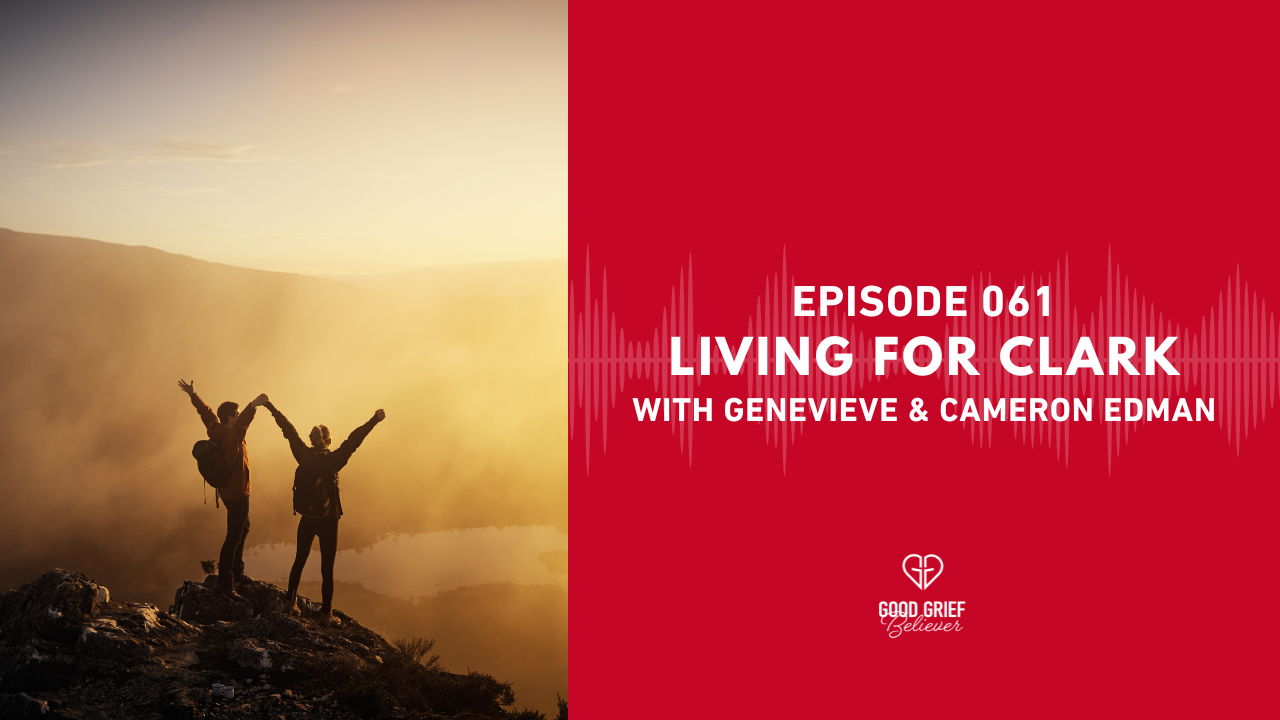
Ep. 061 with Genevieve & Cameron Edman
In a tender episode of the Good Grief Believer podcast, Genevieve and Cameron Edman share the story of their son Clark: the stunned hush of a prenatal diagnosis, the months of anticipatory grief, and the years of learning how to live with a heart that both aches and hopes. Their conversation is gentle and honest — the kind of witness that comforts other grieving parents. Written in the voice of a Christian mother who has found a fragile, steady peace, this reflection focuses on healing after child loss and offers practical tenderness for anyone walking that long road.
The Day the Ground Shifted
The phone call was short and seismic: “There’s something wrong with our baby.” Genevieve remembers the two of them climbing a hill outside their home, trying to breathe and see the valley below while the world narrowed to a single, unbearable fact. That moment launched dozens of specialist visits, long drives, and the slow dawning that their child was “incompatible with life.” For many parents, this kind of prenatal diagnosis begins a season of anticipatory grief — an odd, prolonged sorrow that feels like living in a desert. Yet Genevieve and Cameron also speak of that desert as a proving ground: a painful season that drew them nearer to God and prepared them, in some mysterious way, for the deep mourning to come.
Healing after child loss often begins here — in the quiet articulation of the fear and the choice to hold one another through it. The Edmans’ witness is simple: pray honestly, name the fear, and keep walking together.
Two Kinds of Grief: Before and After
Grief arrived twice for them: the slow grieving during pregnancy, and then the raw, physical grief after Clark died. Genevieve describes the postpartum reality with heartbreaking specificity — milk coming in with no baby to feed, “ghost cries” when other infants wail down the hall, the strange emptiness of a body that had carried life and now held a lifeless child. Those ordinary details are devastating because they are ordinary — small, unavoidable reminders of what was lost.
Cameron and Genevieve remind listeners that anticipatory grief is not a rehearsal that immunizes a family against pain. Both kinds of grief deserve tenderness. Healing after child loss needs time, permission to mourn afresh at different stages, and the space to grieve both the life that might have been and the life that was.
A Faith That Wrestles
One of the most hopeful threads in their story is not a tidy theology but a faith that wrestles. Genevieve calls herself a “daily convert”: each morning she comes back to the same questions about God’s goodness and presence, then chooses again to trust. They reject faith‑splaining — the quick scripture or platitude that minimizes the wound — and instead model an honest spirituality that names pain first and leans into God’s comfort second.
For those looking for healing after child loss, this kind of faith is vital: it is a faith that sits in the suffering, brings God into the broken place, and holds open the possibility that grief and trust can coexist.
Naming and Including the Child
The Edmans keep Clark alive in the rhythms of family life. When asked how many children they have, they sometimes include him. Their living children freely say, “There’s seven, because Clark’s in heaven,” and that openness makes room for grief and love to coexist. Naming a child who has died is not morbid; it is restorative. It reminds the family that the loss is real, that the child mattered, and that memory is a tender thread in the process of healing after child loss.
This practice — simple, courageous, ordinary — invites others to speak the child’s name, share stories, and let grief breathe in community.
The Quiet Work of Remembering
Grief reshapes relationships. Some friendships softened; others deepened. Genevieve remembers a woman who brought flowers on Clark’s anniversary — a small act of remembrance that felt like a lighthouse. For long‑term healing after child loss, those persistent, humble acts matter more than grand gestures. They say, “We remember with you,” not “We fixed you.” Community that shows up months and years later is a balm, and steady presence matters more than clever words.
Triggers, Holidays, and the Nonlinear Path
Triggers still come, even a decade later: pregnancy announcements, lullabies, holiday tables imagined complete. Genevieve speaks of “dark nights of the soul” — moments when the grief returns so sharply she needs to step away, visit the graveside, or ask for a coffee and a warm hand. Healing after child loss is nonlinear; anniversaries and seasons reopen the wound, and that is normal. The wise response is grace: allow tears, set boundaries, ask for help, and honor the heart’s rhythms rather than pushing grief away.
From Pain to Purpose: Building Community
Out of their sorrow, the Edmans planted hope. Genevieve took a church job during a fragile season, which led to creating a co‑op and later a high school that now serves families and honors the motto “Heaven is our mission.” This work didn’t erase grief, but it gave it shape: pain poured into service, memory translated into education and community support. Post‑traumatic growth does not mean the hurt is gone; it means the hurt becomes a source of compassion and purpose. For parents seeking healing after child loss, service can be a lifeline — not to prove anything, but to live out love that honors a child’s memory.
Marriage: Choosing to Grieve Together
Losing a child presses hard on marriage. The Edmans made deliberate choices: Cameron intentionally entered the pain, Genevieve welcomed that companionship, and together they took time after the birth to weep and pray in a little cabin. These small practices protected their union. They learned to let most petty conflicts fall away and to guard their shared peace. For couples, healing after child loss often depends on choosing connection over isolation: praying together, creating quiet rituals, and refusing to let grief drive them apart.
Grieving Well: Soft Hearts and Outward Love
When asked what it means to grieve well, they answer with humble clarity: keep the heart soft, allow sorrow to pierce rather than harden, and let grief open the heart outward in service to others. They warn against numbing or turning grief into self‑absorption. The right kind of grieving keeps one receptive to God and neighbor, trusting that pain can be redeemed without being explained away.
Healing after child loss is not a tidy finish line. It is a daily tending: honest prayers, small acts of remembrance, community that remembers through the years, and the courageous refusal to pretend the wound never existed.
Conclusion: A Hope That Holds Sorrow
Genevieve and Cameron’s story does not promise painless closure. What it offers is a companionable hope: that grief and faith can coexist, that memory can be a mode of love, and that sorrow can be shaped into service. For any mother or father searching for healing after child loss, their witness is a gentle invitation — to name the hurt, to keep the child’s name alive, to lean into God honestly, and to let community walk with them for the long haul.
If this reflection resonates, consider bookmarking anniversaries, making small rituals of remembrance, and reaching out to your own circle to ask for the kind of steady, long‑term support that truly helps. Healing after child loss is a tender, ongoing journey — and one that, with grace, can transform sorrow into a deeper, gentler ministry of love.
Stay connected with news and updates!
Get the latest podcast episodes, new resources and more delivered right to your inbox.
Don't worry, your information will not be shared.
We hate SPAM. We will never sell your information, for any reason.
