
Hope All The Way
Apr 07, 2026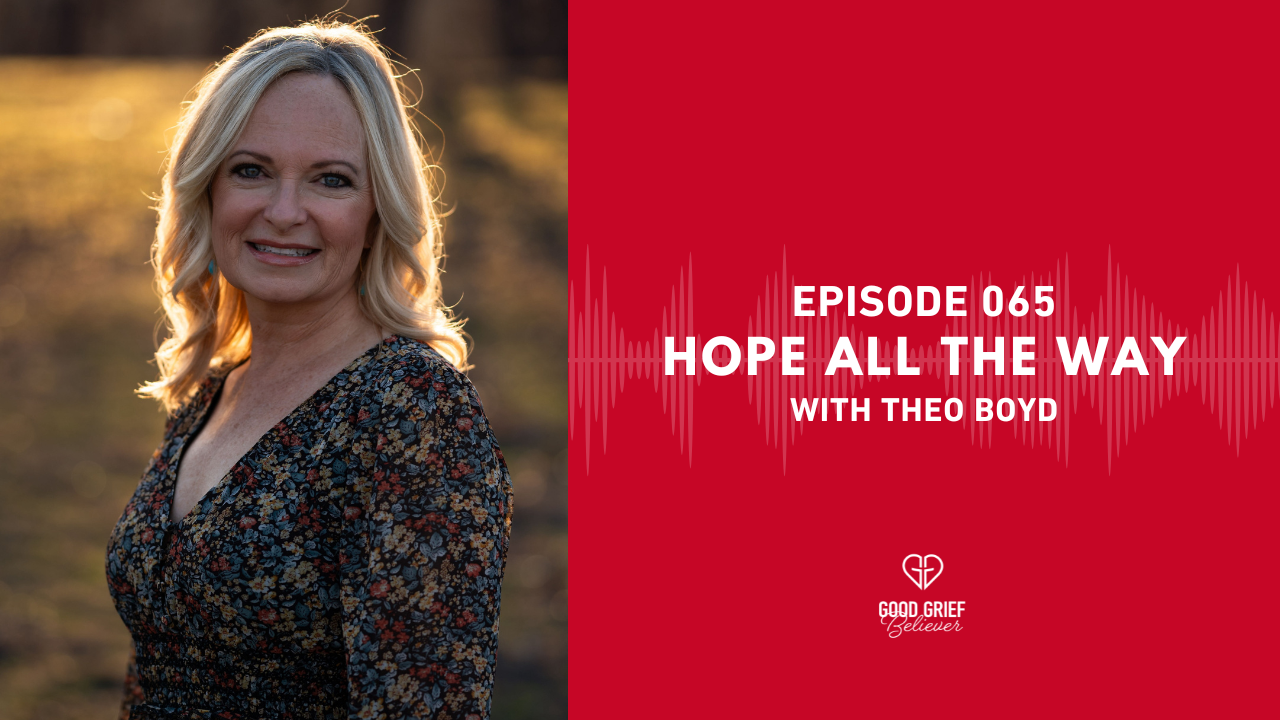
Ep. 065 with Theo Boyd
In a tender episode of the Good Grief Believer podcast, host Julie Craig warmly visited with Theo Boyd about her newest book, Hope All the Way, the small, sacred “signs” that have helped her feel connected to her parents since their passing, and a landmark research project she commissioned on the state of grief in America.
A Sequel That Felt Like Remodeling the Heart
Theo explains that Hope All the Way grew naturally from her first book, My Grief Is Not Like Yours. The first book felt like building a house on empty land—there was space and raw feeling to fill. The second book felt more like remodeling: deciding which pieces to keep, which rooms to refurnish, and what new mementos to bring along. In Hope All the Way she catalogues signs, expands memories, and folds in the results of the State of Grief study she commissioned. For those searching for grief resources, this companion volume offers deeper practical counsel, spiritual reflection, and the encouragement that grief can be integrated into a life of purpose.
Signs and Flashbulb Moments: Love That Still Speaks
One of the most tender strands of the conversation is Theo’s testimony about “signs”—those uncanny, loving nudges that say, in small ways, “I am still with you.” She tells a story of speaking out loud at her parents’ graveside, asking to hear her father’s voice once more, then later discovering her phone suddenly populated with old voicemails—all from her dad. For her, that was a flashbulb moment: sharp, memorable, and impossible to easily dismiss.
Theo and Julie both speak of an inner whisper or a thought that doesn’t feel like the ordinary self-talk—an external, compassionate guidance. They counsel openness to these moments. Whether one names them spiritual signs, moments of God’s comfort, or mysterious coincidences, these experiences can be powerful reminders that relationship with those we love isn’t severed by death. For people seeking comfort after loss, paying attention to small, meaningful signs can be a gentle port in the middle of grief’s storm.
Grief Is Not a Disorder; It Is Part of Living
Theo pushes back against pathologizing language. She is troubled by the renaming of “complicated grief” to “prolonged grief disorder” in some diagnostic frameworks. Grief, she says, is a human response to loss—normal, necessary, and not inherently disordered. Her message is both pastoral and practical: grieving people need witnessing, not stigma.
Instead of seeking a quick fix, Theo advocates integration—learning to carry loss as part of one’s life so it becomes a companion rather than an imprisonment. “It’s not getting easier,” she says softly; “I’m getting stronger.” For many readers and listeners searching “how to cope with loss” or “grief support,” this distinction matters: healing is not erasing memory but finding new ways to live with it.
From Meaning to Purpose: Serving Others Heals
One of Theo’s most loving pieces of counsel is about purpose. She distinguishes meaning—what matters to a woman’s heart—from purpose, which emerges when meaning is put into service for others. Her own grief found a healthier channel when she became a grief educator, writer, and witness. The discipline of pouring herself into helping others shifted focus outward and offered life anew.
This is practical advice for the newly bereaved: volunteer, join a support group, write letters, or simply sit with someone else who hurts. These acts of service needn’t be grand—bringing a casserole, offering to mow the lawn, or listening without giving advice are profoundly therapeutic. For anyone googling “how to find purpose after loss,” Theo’s example shows that serving is a sacred path toward healing.
The State of Grief Study: Data That Demands Care
Theo’s decision to fund and complete the State of Grief study is one of the episode’s most important gifts. Partnering with the Center for Generational Kinetics, she wanted to move from anecdote to evidence about how grief shapes contemporary life. The study’s sobering findings are useful for pastors, counselors, and anyone looking for evidence-based grief resources:
- 64% of grieving Americans think about their most significant grief, trauma, or pain more than once a day.
- 68% isolated themselves or avoided people after their most recent loss; this was highest among Gen Z.
- 84% of Americans wish they could talk more openly about grief, loss, or tragedy.
Those stats make clear that grief is not a private footnote—it’s a public health matter closely connected to loneliness and mental health struggles. Theo links unresolved sorrow to increased susceptibility to harmful coping mechanisms and, in some cases, to tragic outcomes. For Christian caregivers and those searching for grief counseling resources, the study underlines the urgency of building compassionate, accessible support.
Witnessing Hurts: The Simple Art of Being Present
At the heart of the conversation is an ever‑gentle plea: witness one another. Theo notes that lashing out can be a sign a person’s sorrow has not been sufficiently heard. She draws a tender parallel to children who act out from neglect—adults in grief can behave similarly when they lack witnesses.
Practical ways to witness include naming the deceased by name, offering specific help (“May I mow your lawn on Saturday?”), or simply sitting with a cup of coffee and listening. This is not complicated ministry—just faithful presence. For families, churches, or friends wondering how to support someone in loss, Theo’s advice is simple and Godly: show up, listen, and let love be the language.
Boundaries, Red Flags, and New Relationships
Theo also offers prudent wisdom for those dating after loss. She includes a chapter on “burned” experiences—red flags in new relationships that grieving people sometimes miss. If a partner consistently discourages someone’s dreams, belittles their hopes, or seems to extinguish light rather than fan it, grief can make it harder to discern unhealthy patterns. Theo urges discernment: grief does not excuse harmful dynamics; rather, it should encourage guarded openness and faithful reliance on trusted friends and spiritual counsel.
The Seriousness of Suicidal Thoughts and the Need for Compassionate Care
The study’s sobering dimension includes the reality that many grieving people have grappled with suicidal thoughts—an urgent call to compassionate action. Theo and Julie discuss how spiritual faith can be protective but is not an automatic shield against despair. Faith communities must be prepared to walk alongside hurting people with both prayer and practical supports, connecting them to mental health resources when necessary.
A Mother’s Closing Invitation
Theo’s voice throughout the episode is that of a steady mother who has known deep loss but found a gentle peace rooted in God, service, and community. Her closing invitation is simple and tender: allow grief to be part of your life without allowing it to be your whole identity. Bring your loved ones with you into the future; name them, remember them, and put the love you carry into service.
If the holidays are heavy and you find yourself searching for comfort, remember Theo’s wise counsel: pay attention to small signs, seek connection, ask for help, and give your sorrow a sacred place rather than a secret closet. For families, churches, and caregivers, the State of Grief study and Theo’s words together are a summons to show up—to witness, to serve, and to build a culture where grief is spoken about and safely carried.
For practical grief support, community events, and Theo’s books—My Grief Is Not Like Yours and Hope All the Way—visit her resources and consider reading the State of Grief study online. In the sweet, faithful rhythm of living with loss, grief and hope can walk hand in hand, and life—slowly, gently—becomes possible again.
Stay connected with news and updates!
Get the latest podcast episodes, new resources and more delivered right to your inbox.
Don't worry, your information will not be shared.
We hate SPAM. We will never sell your information, for any reason.
